Date
30 April, 2026STARTS
13 September, 2026eNDS
Room
Exhibition Hall III
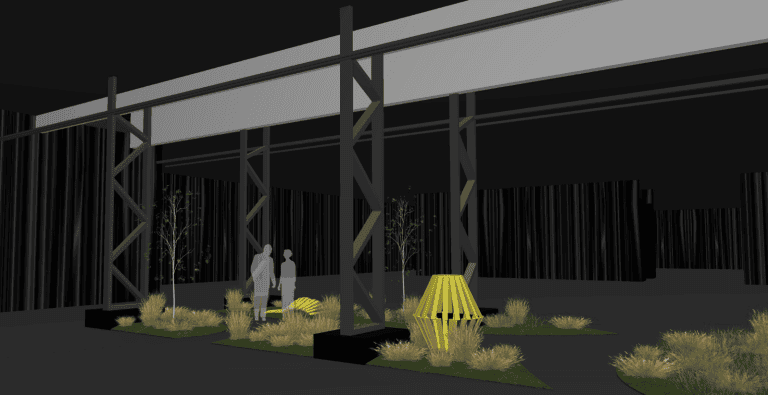
Welcome to the visual world of the artist Linas Leonas Katinas. Take a breath, embrace the darkness. In creating this exhibition, we hoped you would feel enveloped in a soft veil of darkness and prepare your gaze for the other side – where the Sleepers rest.
Linas Leonas Katinas (1941–2020) was one of the most distinctive modernist artists born and working in Lithuania. His creative biography, spanning six decades, captivates with its unique playfulness, vibrant energy, and a mysticism of his own.
The artist was deeply fascinated by existence itself, or transcendence, understood as a spiritual experience beyond ordinary sensory perception and the limits of earthly matter. The exhibition invites visitors to explore this intriguing dimension of Katinas’s work. His individual worldview intertwines with fragments of myths and archetypes from ancient civilisations, while transcultural, timeless references and symbols speak of transience, a longing for eternity, and human, almost naive attempts to grasp the unfathomable mysteries of the universe.
Katinas considered himself a Buddhist. His need for spiritual depth emerged in response to Soviet atheist propaganda, which provoked a rebellious young mind to oppose it. He became interested in Buddhism after encountering it in Mikalojus Konstantinas Čiurlionis’s letters to Sofija. He began studying related literature – some of which he got from friends in the United States – and even taught himself Tibetan script. In the early 1970s, while working as a set decorator in Moscow, Katinas befriended Oktyabrina Fyodorovna Volkova, a professor of Tibetan culture and Sanskrit who belonged to the circle of the artist, designer, and mystic Nicholas Roerich. He also became familiar with the theosophical ideas of Helena Blavatsky. It seems that all the coincidences he encountered along the way led Katinas to Buryatia, a republic in Siberia where, despite Soviet repression, a vibrant tradition of Tantric Buddhism persisted and the renowned lamas Bidia Dandaron and Cyrengzhab Gatabon lived. The latter would become Katinas’s teacher.
Most of the works presented in this exhibition were created in the 1970s and 1980s, when the artist’s liberated imagination was ablaze with colour and, as he himself put it, transatlantic ornamental threads connecting Lithuanian folk bedspread patterns with the colours of the chakras. A self-taught painter (he studied architecture), Katinas developed his own personal mythology – playful, like a child building fragile bridges between East and West, the profane and the sacred, naivety and grandeur. In his cosmological vision, the idea of eternal cyclical change recurs: a return to the cycle of birth, death, and renewal.
In the 1970s, Katinas’s imagination also became filled with words, which eventually turned into poetry and are now being presented here for the first time. The exhibition’s title, Another Turn of the Sleepers, is drawn from one of his poems. It expresses a tender hope to re-turn to the now-sleeping Katinas and to his extraordinary creative world. Thus, it is an invitation to feel that restless human longing for something we hope to encounter only on the other side of this world, where one day we too will sleep.
All works by Linas Katinas presented in the exhibition belong to the collection of the physician Virgilijus Novaiša – currently one of the largest private collections of the artist’s work, housed in Panevėžys. The exhibition is complemented by two works created specifically for this occasion by other artists, each inspired by Katinas’s practice and expanding its context. The first is a documentary narrative exploring the artist’s life and the relationship between his work and Buddhism, created by director and video artist Gintaras Šeputis in collaboration with the exhibition’s curator, Jolanta Marcišauskytė-Jurašienė. The second is a sensitive sound installation by composer Agnė Matulevičiūtė and actor Gediminas Rimeika, based on recordings of Katinas’s heartbeat and his poetic texts. The installation is accessible to visitors with hearing impairments.
The exhibition’s advertising campaign features the work Crooked Cloud (1970) by Linas Leonas Katinas.
Please remove your shoes before entering the exhibition.
Curator Jolanta Marcišauskytė-Jurašienė
Architect Ieva Cicėnaitė
Graphic Designer Laura Grigaliūnaitė
Film Authors: Gintaras Šeputis, Jolanta Marcišauskytė-Jurašienė
Sound Installation Creators:
Composer Agnė Matulevičiūtė
Voice Gediminas Rimeika
Poetry Linas Leonas Katinas
Sign Language Interpretation: Raimonda Vaičeliūnienė, Birutė Šimkienė, Lijana Čiplienė
Cinematographer Dinas Marcinkevičius
Video Editing Arnas Dambrauskas
Translation and Editing Alexandra Bondarev
Technical Production of the Exhibition: Irmantas Kuskys (MB „Irsaul“), Vadim Šamkov, Liudvikas Kesminas, Rytis Urbanskas, Tomas Styra, Paulius Lalas
Exhibition Lighting Designer Renaldas Bartulis
Financed by Panevėžys City Municipality
Sponsored by UAB „Kalnapilio-Tauro“ grupė, OWEXX, 2go
Media partner LRT
Organised by Stasys Museum


Photos by N. Tukaj